



2D Bounding Box Annotation
Label objects in images with rectangular bounding boxes to identify their locations. This supports object detection datasets for applications such as autonomous driving, retail analytics, manufacturing, and security.
Polygon/Contour Annotation
Trace object boundaries with connected points to capture irregular shapes more precisely than rectangular boxes. Polygon annotations are useful when accurate object outlines are important for model training.

Semantic Segmentation
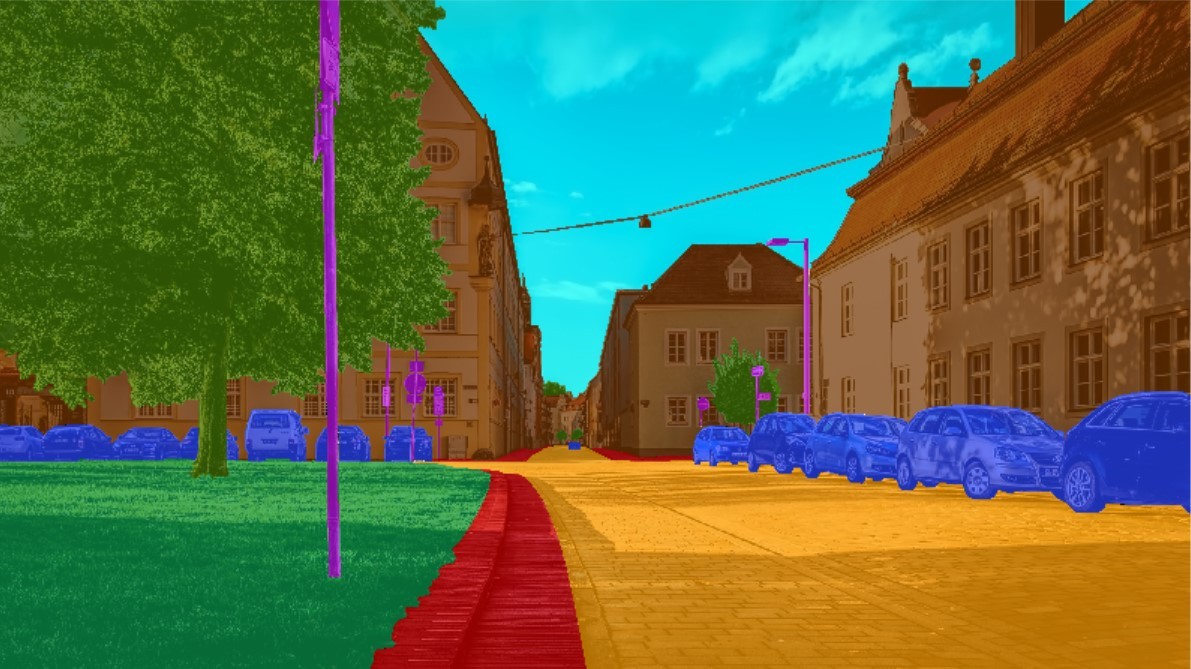
Label images at the pixel level to help models accurately distinguish objects and regions. Semantic segmentation assigns categories to pixels, while instance segmentation also separates individual objects in a category.
- Full pixel/Standard segmentation.
- Instance segmentation.
Cuboidal/3D Bounding Box Annotation
Represent objects using three-dimensional bounding boxes for precise spatial perception and 3D object detection datasets. The annotation workflow depends on whether the source is a 2D image or 3D point cloud data.

Key Point Annotation
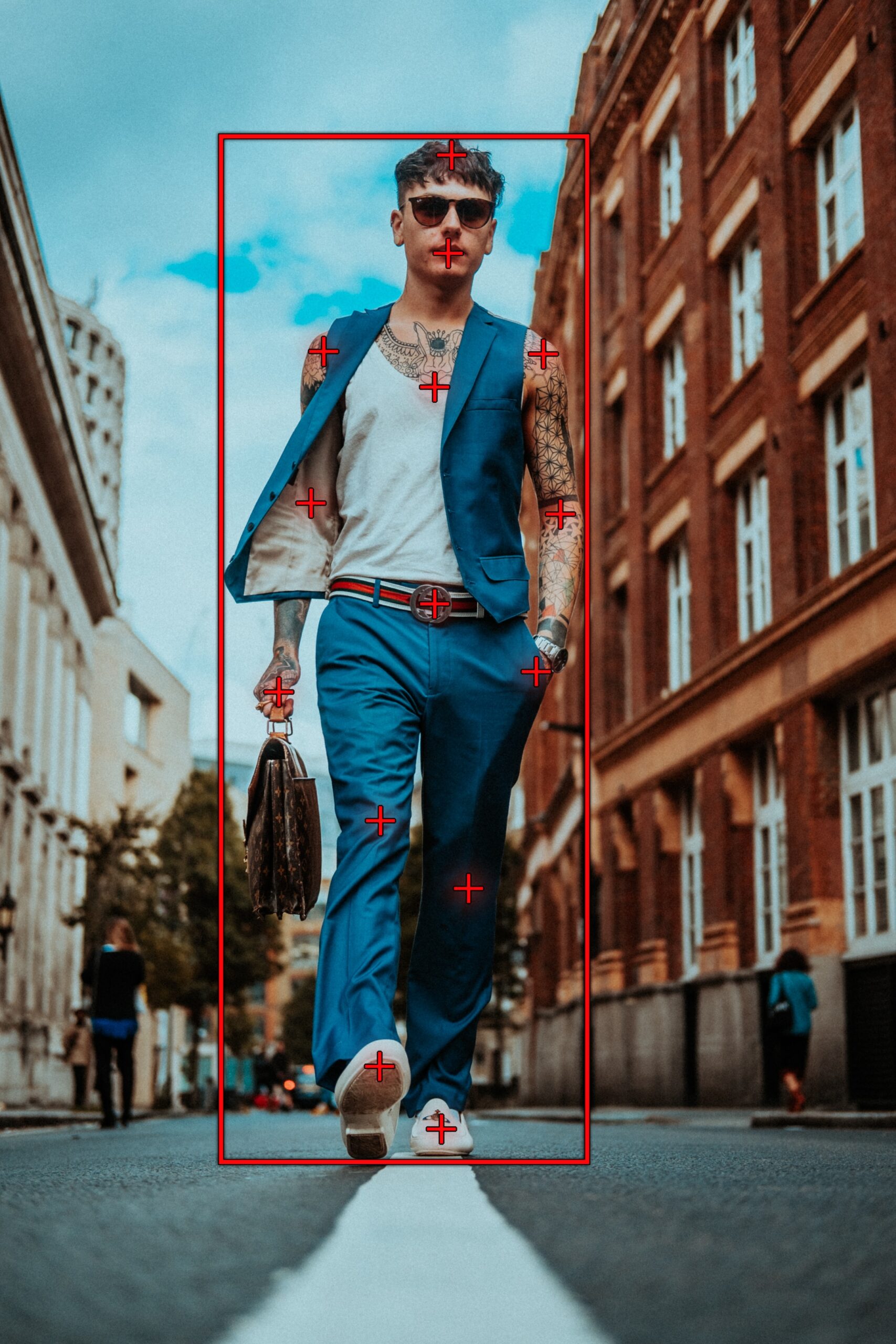
Mark important points on objects, such as skeletal joints, facial landmarks, or component reference points. These annotations support pose estimation and object landmark detection in computer vision and AI models.
Polyline Annotation
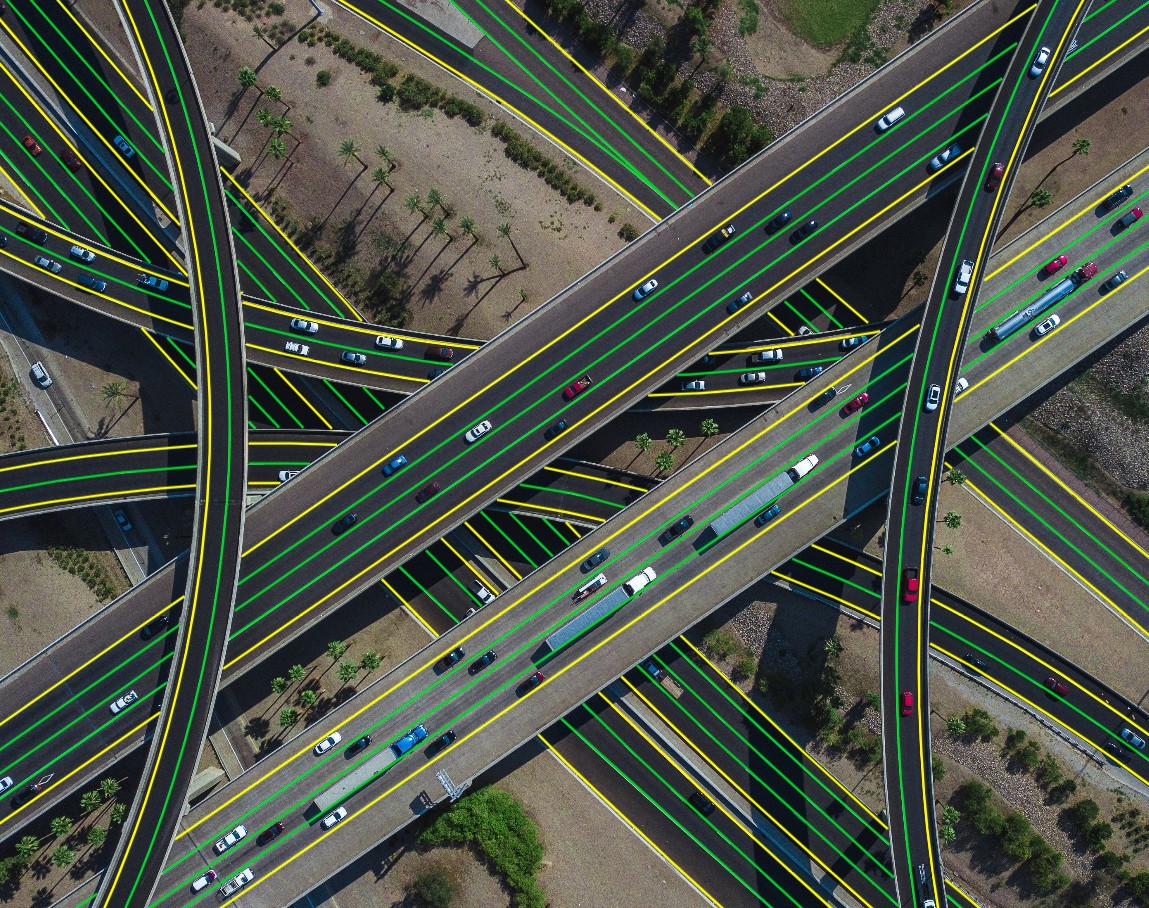
Trace linear features using connected points to create annotated datasets for lane detection, road boundaries, and other applications involving elongated structures such as pipelines, power lines, cables, and edges.
Frequently Asked Questions
Image annotation and image labeling services involve labeling objects, regions, boundaries, or keypoints in images to create structured datasets for training and evaluating AI models. Common applications include object detection, image segmentation, and visual recognition.
Common image annotation techniques include 2D bounding box annotation, polygon annotation, semantic segmentation, instance segmentation, cuboid annotation, keypoint annotation, and polyline annotation. The appropriate technique depends on the target objects and the intended AI application.
Image labeling services help create structured image datasets by assigning labels to objects, regions, boundaries, or keypoints. These labeled datasets can support AI model training and evaluation for tasks such as object detection, image segmentation, and visual recognition.
2D bounding box annotation uses rectangular boxes to mark object locations in images. It is commonly used to prepare datasets for object detection models in applications such as autonomous driving, retail analytics, and manufacturing inspection.
Polygon annotation traces object boundaries using connected points to create an outline. Semantic segmentation assigns class labels at the pixel level. Both can represent object shapes, but they use different annotation approaches and may suit different project requirements.
Semantic segmentation assigns category labels to pixels, while instance segmentation also distinguishes individual objects within the same category. For example, semantic segmentation labels pixels as cars, whereas instance segmentation separates each individual car.