



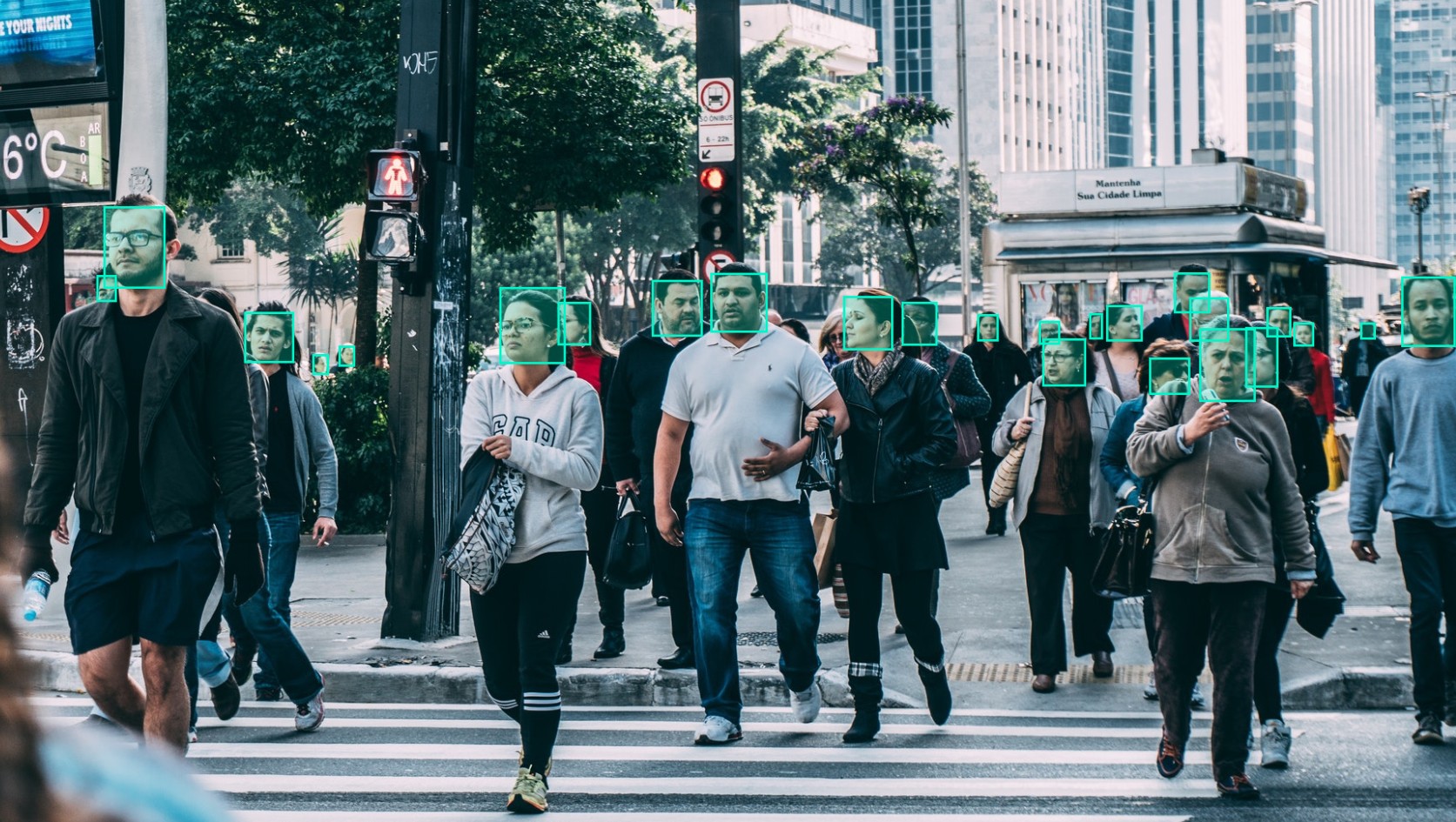
Face Detection & Tracking
Locate faces accurately in images and video. Facial annotation services help identify human faces in images and video. Annotators use bounding boxes to label face locations and prepare datasets for face detection and supported tracking applications.
- Bounding Box Annotation: Marks the location of a face or person.
- Key Point Annotation: Labels defined points on faces or bodies.
Human Attribute Annotation
Consistent labels for visible characteristics. Human attribute annotation involves labeling visible characteristics such as clothing, body position, and other project-defined attributes. Clear annotation guidelines help maintain consistent labels across training datasets.


Facial Attribution & Recognition
Precise landmarks for facial analysis. Facial landmark annotation identifies key points around relevant facial features, such as the eyes, nose, and mouth. These labels can support facial analysis and recognition-related computer vision models, depending on the project’s requirements.
Crowd Managment system
Datasets for counting and crowd analysis. Crowd counting annotation involves labeling people in images or video using suitable methods, such as bounding boxes, to support counting and crowd-analysis models. These datasets can be used in public-space monitoring and crowd-management applications.


Mask Detection
Label people wearing masks with confidence. Mask detection annotation uses bounding boxes or polygons to label people wearing masks in images. The resulting datasets can support computer vision models developed for mask detection and related visual classification tasks.
Gender Classification
Defined labels, clear data-handling requirements. Where required and appropriately authorized, datasets can be annotated with project-defined gender labels for classification research. Label definitions and data-handling requirements should be established before annotation begins.


3-D pose estimation & Tracking
Follow human movement over time. Human pose estimation annotation can also involve labeling and tracking body keypoints across video frames or supported 3D data. Consistent annotations help prepare training datasets for models that analyze human movement over time.
- Polyline or Skeletal Annotation: Connects body key points to represent pose structure, where supported.
- Polygon Annotation: Outlines people or visible regions when the project requires contour-level labels.
- Video Annotation: Applies labels across video frames, with tracking where supported.








Frequently Asked Questions
Human image annotation services involve labeling people, facial landmarks, body keypoints, and other defined visual characteristics in images or video frames to prepare datasets for computer vision model training and evaluation
Facial annotation is the process of labeling faces or specific facial features in images and videos. Depending on the project, it may include face bounding boxes, facial landmarks, and other defined visual labels.
Facial landmark annotation identifies specific reference points on a face, such as the corners of the eyes, nose, and mouth. These points can help prepare datasets for facial alignment and facial-analysis models.
Human attribute annotation labels defined, observable characteristics of people in images or videos. Examples may include clothing type, clothing color, and accessories, depending on the project requirements.
Human pose estimation annotation labels body keypoints, such as shoulders, elbows, hips, and knees, to represent body posture. Some projects also require 3D joint positions or annotations across video frames
Face detection identifies where a face appears in an image, commonly using a bounding box. Facial landmark annotation identifies specific points within the detected face, such as eye corners and the nose tip.