


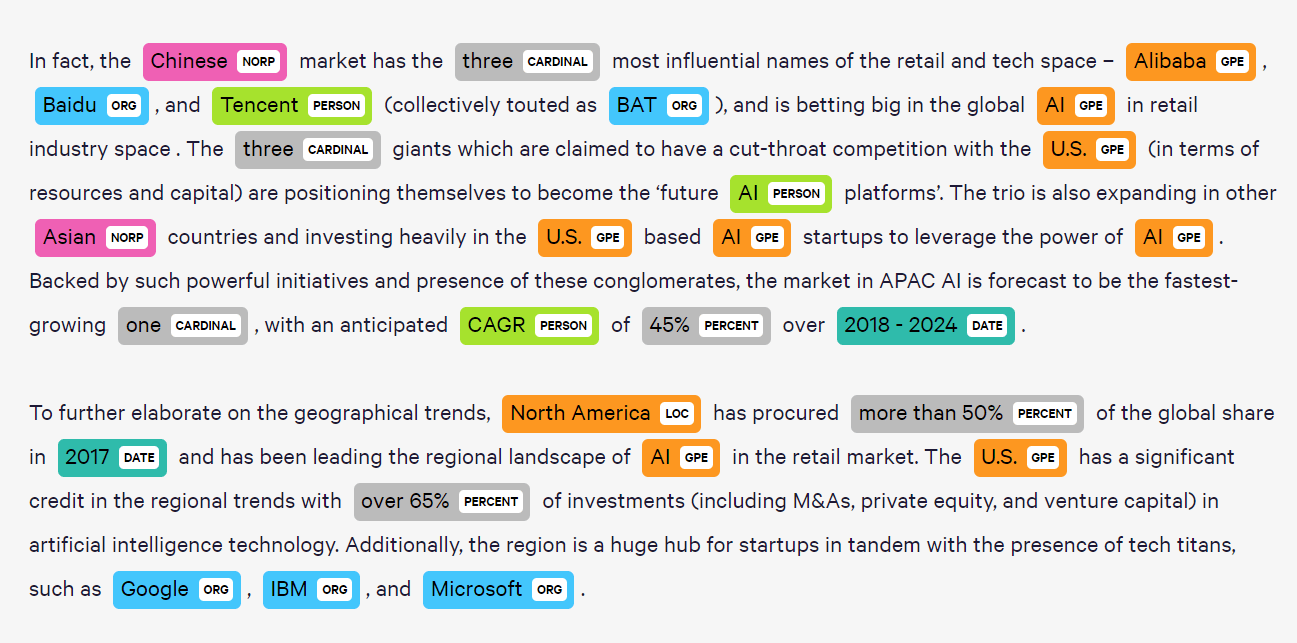
Named Entity Extraction
Identify and label entities such as people, organizations, locations, dates, and domain-specific terms in unstructured text, preparing structured NLP datasets for information extraction, search, and other language tasks.
Sentiment Analysis
Label text according to defined sentiment categories and annotation guidelines. Sentiment-labeled datasets can support AI applications that analyze customer feedback, reviews, survey responses and text-based information.


Text Summarization
Prepare source texts and corresponding summaries for text summarization tasks. Clear annotation guidelines define the required level of detail, relevance, and output format for your intended application and its audience.
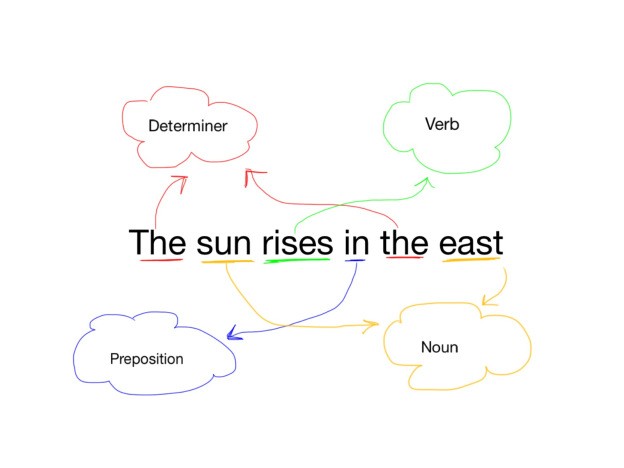
Part-of-Speech (POS) Tagging
Assign grammatical labels, such as nouns, verbs, adjectives, and adverbs, to words according to their context. POS-tagged datasets support linguistic analysis and NLP model development across a variety of language tasks.

Machine Translation
Prepare and review language data for machine translation (MT) workflows. Depending upon your project requirements, this may include translation pairs and linguistic quality review for the specified languages and domains.
Frequently Asked Questions
Natural language processing services help prepare and process text data for AI applications. Depending on the project, these services may include entity extraction, sentiment annotation, text summarization, POS tagging, and machine translation data preparation.
NLP annotation services add structured labels to text so datasets can be used for language-processing tasks such as identifying entities, classifying sentiment, and analyzing grammatical structure.
Text annotation assigns labels or other structured information to text. NLP model training data is the dataset used to train a model and may include annotated text, input-output examples, or other task-specific data.
Named entity extraction identifies text spans that represent categories such as people, organizations, locations, and dates. Annotation guidelines define which entities should be labeled and how they should be categorized.
DPO data annotation typically involves comparing two or more model responses to the same prompt and identifying the preferred response using defined criteria. Include this FAQ only if LabelOps provides this service.
This answer should be added only after the service scope is confirmed. If offered, explain which activities LabelOps performs, such as adversarial prompt creation, response assessment, or risk categorization.


