



LLM Data Annotation Services
Prepare structured language datasets for instruction following, task-specific model adaptation, response evaluation, and human preference workflows.
- Instruction-response annotation
- Supervised fine-tuning (SFT) data preparation
- Human preference ranking
- Response evaluation using defined rubrics
- Domain-specific training examples


RLHF Data Annotation Services
Reinforcement Learning from Human Feedback (RLHF) uses human preferences and other feedback signals as part of a broader model-training process. LabelOps can scope human-feedback annotation workflows around tasks such as response comparison, preference ranking, rubric-based scoring, and response evaluation, where supported. Clear instructions, representative examples, and reviewer calibration help make judgments more consistent across a dataset.
- Ranked response pairs
- Preference labels
- Rubric-based evaluation records
- Annotated feedback datasets
- Quality review outputs

DPO Data Annotation Services
Direct Preference Optimization (DPO) uses preference comparisons to help optimize model behavior. A typical preference dataset contains a prompt, a preferred response, and a less-preferred response. Where this service is supported, LabelOps can scope preference-pair creation or ranking workflows based on client-defined criteria.
Synthetic Data Validation For LLMs
Generated examples may contain factual errors, contradictory instructions, duplication, weak task adherence, or responses that do not meet the intended criteria.
A structured validation workflow can help assess generated datasets against agreed requirements before they are used downstream. Potential activities, subject to service confirmation:
- Rubric-based review
- Factual consistency checks
- Duplicate and inconsistency identification
- Instruction-adherence review
- Error categorization and reporting
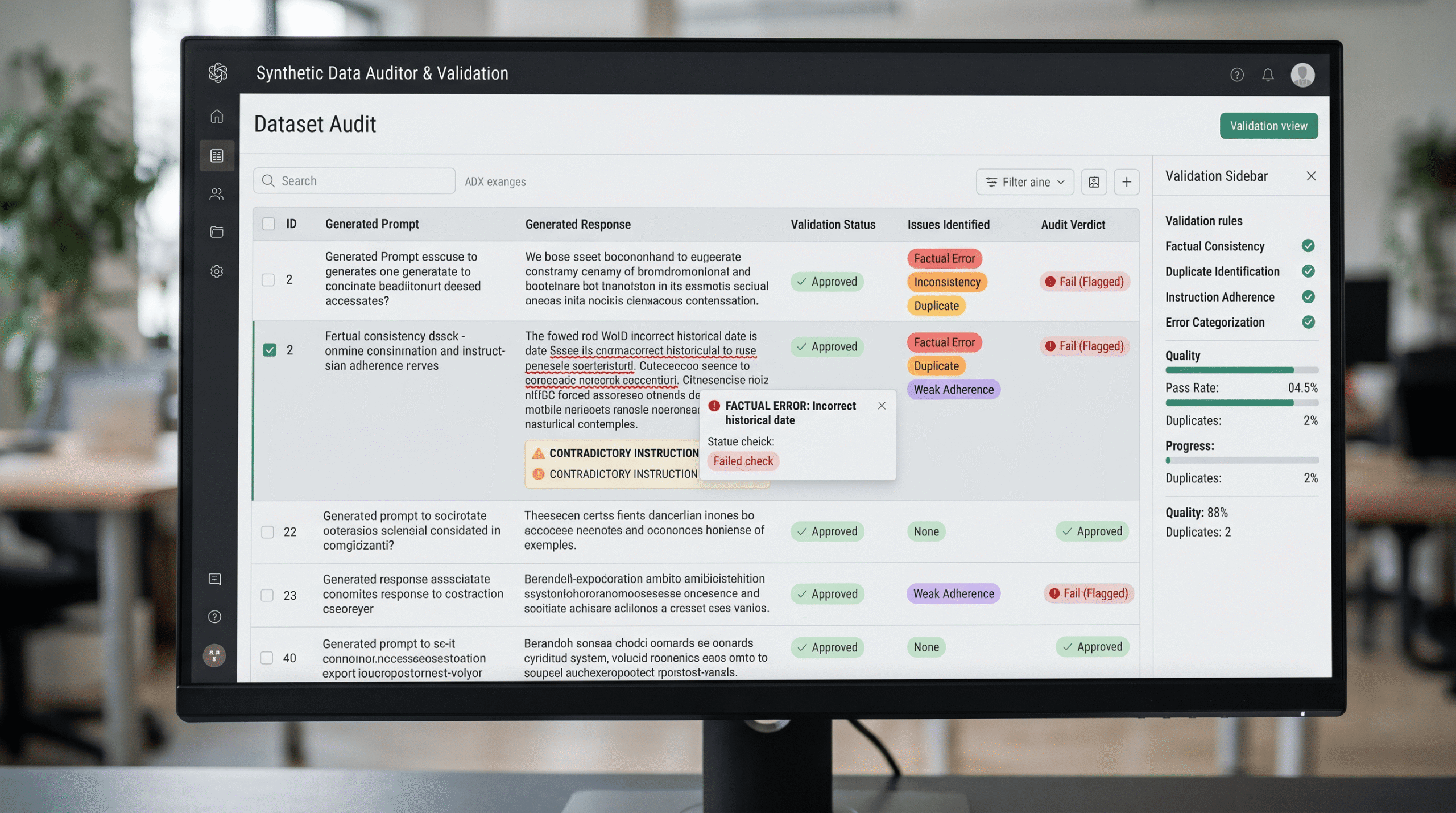
Image-Text Annotation
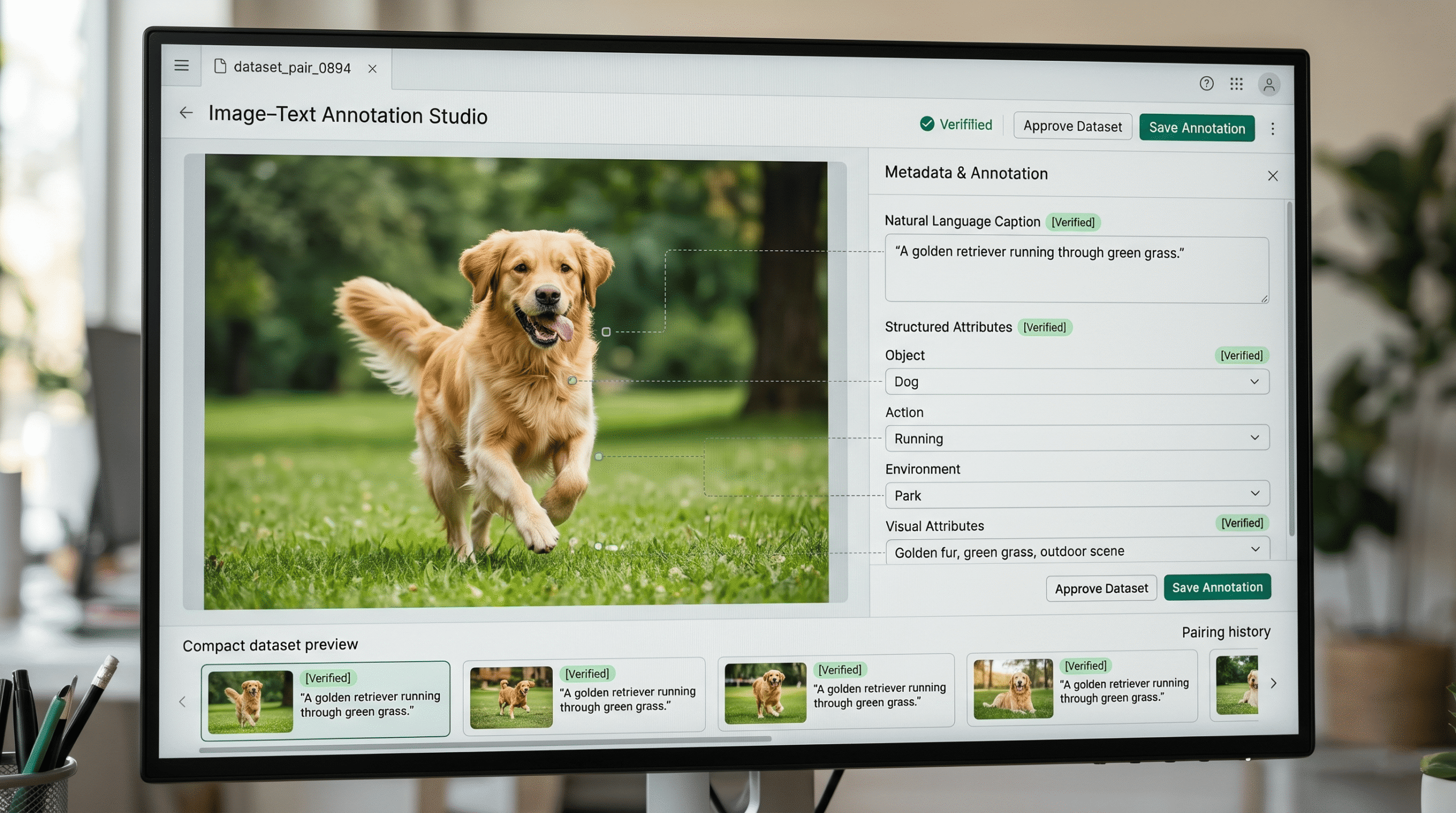
We help annotate image descriptions, image-text relationships, and visual attributes to prepare structured data for image understanding and multimodal AI applications.

Secure RLHF Annotation for Frontier AI
Frontier AI annotation helps enterprises manage proprietary prompts, model outputs, evaluation data and preference datasets through controlled workflows. Our in-house workforce supports project oversight, data intake, access management, processing, delivery and retention or deletion, aligned with approved security controls and compliance requirements.
Run Every LLM Workflow Securely On LabelOps Studio
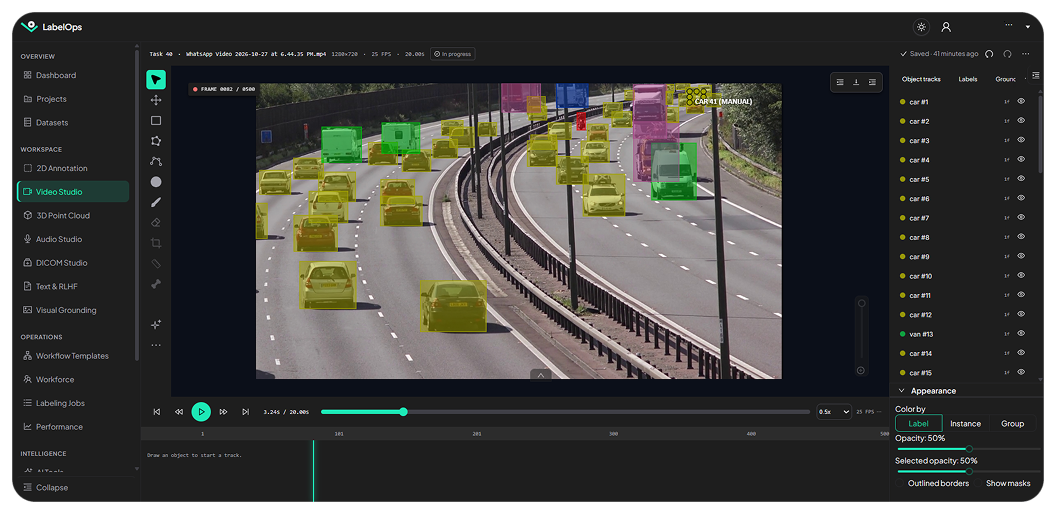
Your LLM project requires more than an annotation tool. It requires a platform, one that handles all workflow and keeps your data locked down. LabelOps Studio is our proprietary multimodal annotation platform, running RLHF, response ranking, entity tagging and VLM (Vision-Language Model) grounding natively, irrespective of whatever the annotation requirements are.
Security is built into the architecture. Zero-trust design and strict tenant isolation keep your proprietary data, prompts, model responses and training datasets private and under your control.
Frequently Asked Questions
SFT uses instruction-response examples for supervised model adaptation. RLHF incorporates human feedback into a broader training process. DPO uses preference comparisons to optimize model behavior. The data requirements depend on the training method and implementation.
Data-handling requirements should be agreed before work begins. Buyers should confirm access controls, approved processing environments, confidentiality arrangements, retention practices, and deletion requirements relevant to the engagement.
Depending on the task, a VLM may use image-text pairs, captions, visual question-answer examples, grounded descriptions, video-related labels, and preference data involving visual context.
The appropriate method depends on the task. Agreement may be evaluated using categorical agreement, ranking comparisons, or task-specific visual annotation measures. Any published metric should include its definition and measurement scope
Video-text alignment connects language descriptions to relevant video frames, timestamps, or temporal events, depending on the annotation specification.
A defined workforce structure can support accountability, training consistency, project coordination, and oversight. Buyers should verify how the provider's actual staffing model supports these requirements.
With appropriate visual grounding and evaluation labels, annotation can help identify responses that are unsupported by the available visual evidence. It does not guarantee that a model will never hallucinate.