



As the clock strikes 11 p.m. on Sunday, four leagues have wrapped up forty fixtures. Your detection models have done their job, but the annotation vendor’s queue has barely moved since Friday.
In ten hours, your brand clients expect audit-ready valuation reports.
This is the recurring challenge behind sports sponsorship data annotation: automated detection can process footage at scale, but validating complex exposures within tight reporting windows requires a specialised operational approach. This article explains why the bottleneck persists in sponsorship valuation data annotation and how dedicated human-in-the-loop validation for sports workflows can help resolve it.
Key Takeaways
◆ CMV is only as good as your validation layer. Clear Media Value (CMV) depends on how precisely every exposure is detected, bounded and clarity-tagged.
◆ Models leave an edge-case tail. Motion blur, occlusion, warped kits and skewed LED boards produce False Positives and loose bounding boxes that require trained human review.
◆ Three bottlenecks determine vendor quality: weekend 12–24-hour Turnaround Time (TAT), geometric precision (IoU/OBB), and consistent occlusion and clarity tagging.
◆ Generalist BPOs struggle when Saturday volumes spike. Specialist Human-in-the-loop validation for sports workflows are designed around these operational demands.
◆ Demand measurable benchmarks. Evaluate 12–24-hour TAT, a proposed ≥95% IoU target on valuation-critical boxes, inter-annotator agreement (kappa) ≥0.85 on clarity tags, contractual weekend surge capacity and secure handling of unreleased footage.
According to Statista, global sports sponsorship revenue reached approximately $105 billion in 2025. As sponsorship investments continue to grow, measurement plays an increasingly important role in demonstrating campaign performance and supporting renewal decisions.
Multi-million-dollar renewals may hinge on an audit-ready metric: Clear Media Value (CMV), representing the monetary value attributed to sponsor exposure based on factors such as on-screen duration, size, placement, and clarity.
Platforms such as Relo Metrics, Blinkfire Analytics, and others operate in this measurement ecosystem. Their workflows process broadcast, streaming, and social feeds, detect sponsor logos at scale, and translate validated exposures into media-value insights.
Relo Metrics describes its workflow as progressing “from data ingestion to annotation, computer vision, QA, ops management.” Annotation and quality assurance are integral stages of this process, not afterthoughts. They are also where operational bottlenecks can emerge.
For these platforms, sports sponsorship data annotation is not simply about identifying a logo. It is about ensuring that the exposure records entering the valuation engine are geometrically accurate, consistently classified, and ready for reporting within the required SLA.
Where the Valuation Pipeline Breaks—and Why HITL Sits There
A valuation pipeline is only as trustworthy as its weakest frame. Three of its five stages are particularly vulnerable to the challenging conditions of live sports.
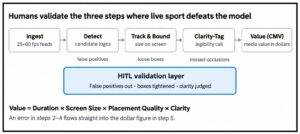
Figure 1: The Five-Step Valuation Pipeline and the HITL Validation Layer
The Human-in-the-Loop (HITL) layer supports Steps 2–4 by reviewing uncertain detections, correcting geometry and resolving visibility-related exceptions before they affect CMV calculations.
Live sports challenge every stage of this workflow. Formula 1 cars can blur at speeds exceeding 200 mph, while NBA broadcasts feature overlapping players and partially obscured jersey patches. Football kits wrinkle and distort sponsor logos into geometries that may differ significantly from the training examples seen by a model.
LED boards viewed from extreme camera angles introduce additional geometric complexity. Virtual advertising can also replace sponsor logos across regional broadcasts, multiplying the number of logo variants that need to be recognised and validated.
The result is predictable: False Positives, missed occluded exposures and inaccurate bounding boxes. Each error can affecfannotat the exposure data used to calculate the value presented to a brand.
This is where sports broadcast annotation becomes critical. A structured validation workflow helps ensure that difficult broadcast frames receive the appropriate review before the resulting exposure records reach the valuation engine.
Bottleneck 1: Monday-Morning SLA Crisis
Sport concentrates into weekends. Right from Friday night to the Sunday whistle, ingestion volume spikes, and by Monday 9 a.m. (EST/GMT), brand managers expect completed ROI reports.
A single two-hour match at 30 fps is around 216,000 frames. Now with aggressive sampling, that leaves around thousands of candidates’ exposure per fixture for human adjudication, and busy Saturdays have dozens of fixtures.
So, if your vendor can’t surge overnight and return the validated data within 12- 24 hours, then you miss the SLA. Frankly, in this industry, late data doesn’t only annoy the client but can even end up cancelling the renewals.
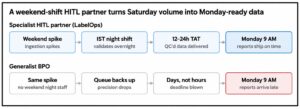
Figure 2: Weekend Turnaround – HITL Partner Vs Generalist BPO
Same spike, same Monday deadline. But the only difference is whether the weekend night capacity exists.
The fix isn’t more headcount on Monday. Here, it is the vendor whose shift pattern simply mirrors the sports calendar. So, Saturday and Sunday fixtures get validated while your US and EU teams are asleep.
Bottleneck 2: Geometric Precision Gap (Screen Percentage = Dollars)
With regard to valuation, box tightness is money. A loose box around a sponsor logo on a slanted LED board overstates screen share and inflates reported media value.
Also, a box that is too tight under-credits the sponsor and triggers disputes. Across a season portfolio, a few percentage points of systematic slack can compound into six-figure swings.
Generic labelers draw axis-aligned boxes and move on. Valuation-grade work needs oriented bounding box (OBB) annotation and polygon segmentation that capture rotation and skew on warped kits and angled boards, enforced at ≥95% IoU with QA sampling that proves it. Detection-level acceptance (IoU 0.5) is fine for training a detector. But when it comes to the number that feeds CMV, it is not fine.
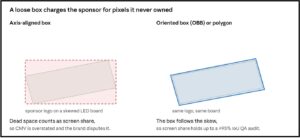
Figure 3: Loose Axis-Aligned Box Vs Oriented Box On Skewed Logo
The closer the box follows the skew, the closer the reported screen share is to what the brand actually got.
Bottleneck 3: Occlusion and Clarity Tagging (The Visibility Score)
Brands won’t pay for logos they cannot see. Was an exposure 50% occluded by a player’s arm, blown out by stadium glare, or smeared by a camera pan? That is a trained human judgment, made thousands of times per match, consistently, against a written guideline.
Generalist vendors rubber-stamp these frames. You see it as a suspiciously low Average Annotation Time (AAT) and valuation reports padded with illegible exposures: false positives that survive into CMV. When the brand audits the report, your credibility takes the hit, not the vendor’s.
Valuation-grade clarity tagging needs a written schema (occlusion percentage, blur class, glare class) and measurable consistency: inter-annotator agreement (IAA) at kappa ≥0.85, tracked per guideline version. That consistency is what protects CMV accuracy when a brand audits the report.
The Hidden Cost of Generalist BPOs
Most platforms outsource validation to large generalist BPO networks. On a normal Tuesday, they are fine. On a Saturday with 40 simultaneous fixtures, they fail in predictable ways:
• Precision Traded For Throughput
Boxes loosen and clarity tags default to “visible.”
• Guideline Drift
Three shifts apply three readings of “occluded,” with no IAA tracking.
• QA Becomes Your Job
Your engineers spend Monday cleaning vendor data instead of shipping reports.
• Security Exposure
Unreleased broadcast footage and embargoed kit designs sit in unmanaged home-office crowds.
• No Surge Contract
Weekend night capacity is simply not staffed.
In-House Vs. Generalist BPO Vs. Specialist HITL Partner
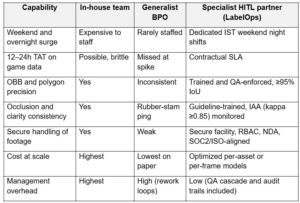
The Benchmark Checklist: 10 Questions to Ask Any Sports Annotation Vendor
Use these in your next RFP or vendor review. A specialist partner for logo detection annotation and brand logo annotation answers all ten with evidence, not adjectives.
1. Can you contractually commit to 12–24h TAT on weekend spikes, across multiple leagues at once?
2. What IoU threshold do you enforce on valuation-critical boxes, and can you show QA sampling reports?
3. Are OBB and polygons your standard, or only axis-aligned boxes?
4. How do you measure and report inter-annotator agreement on clarity and occlusion tags?
5. What is your AAT baseline per task type, and how do you flag rubber-stamping?
6. How is unreleased footage handled (facility, RBAC, air-gapping, NDAs, audit logs)?
7. What does your QA cascade look like: annotator, reviewer, QA lead, client audit?
8. How fast can you ramp headcount for a new league or season kickoff?
9. How do you version guidelines when a league changes kits or sponsors mid-season?
10. Can we run a pilot on one fixture with agreed acceptance criteria before scaling?
How LabelOps Runs Weekend-Ready HITL for Sports Valuation?
LabelOps is not a click-farm. We are a specialized, high-velocity partner for sports sponsorship data annotation, built around the rhythm of the sports calendar:
• 12–24h TAT, Guaranteed By Timezone
Dedicated IST weekend night shifts process Saturday and Sunday game data while US and EU teams sleep. Validated, QC’d datasets land before your clients log in on Monday.
• Valuation-Grade Geometry
Senior annotators trained on tight OBB and polygon segmentation, with QA protocols enforcing ≥95% IoU so your CMV math stays audit-proof.
• Sports-Broadcast Clarity Tagging
Teams trained on motion blur, glare blowouts and complex occlusion, so you report only exposures brands will gladly pay for.
• Enterprise-Grade Security
In-house secure facilities, role-based access, NDA-bound staff and SOC2/ISO-aligned protocols from ingestion to final QA.
• Scale On Demand
2,000+ in-house annotators and dedicated QA leads, scalable per league and season.
What It Changes For Your Team
• Director of Data Operations: One accountable partner with IAA and AAT reporting, a QA cascade with audit trails, and no Monday rework loop.
• VP of Engineering or AI: Tight OBB and polygon ground truth, plus consistently tagged edge cases you can feed straight back into retraining. Fewer false positives, and engineers stay on the model.
• Head of Customer Success: Reports ship before the brand logs in, and every CMV figure traces back to a validated frame when the brand audits it.
FAQs
1) What is human-in-the-loop validation for sports sponsorship measurement?
A QA layer where trained annotators review, correct, and confirm model outputs (logo detections, boxes, tracking IDs, clarity tags) before exposures feed the media-value model.
2) How fast can a vendor return weekend game data?
Specialist partners with dedicated weekend shifts contract 12–24h TAT. Generalist vendors typically quote days and miss spikes.
3) What IoU should I demand for valuation-critical boxes?
At least 95% on boxes that feed screen-share calculations, with QA sampling evidence. Detection-level acceptance at IoU 0.5 is not valuation-grade.
4) How should occluded or blurred logos be handled?
Through a written clarity schema (occlusion percentage, blur class, glare class) applied consistently, with IAA monitored at kappa ≥0.85.
5) Is unreleased footage safe with an offshore vendor?
Only in secure-facility models: NDA-bound staff, RBAC, air-gapped workstations, audit logs, and SOC2/ISO-aligned controls. Crowdsourced home-office models are a leak risk.
Your Validation Layer Is Your Product’s Credibility
For sponsorship valuation platforms, the speed and precision of your human validation layer set CMV accuracy and the financial credibility of every report you ship. Slow BPOs, missed SLAs, and sloppy boxes do not just cost you a weekend. They cost you the brand relationship.
Stop fighting the weekend spike alone. Book a free demo and pilot a custom, high-speed HITL workflow built for sports sponsorship analytics: one fixture, agreed acceptance criteria, validated data before Monday morning.